‘Tit Cookies
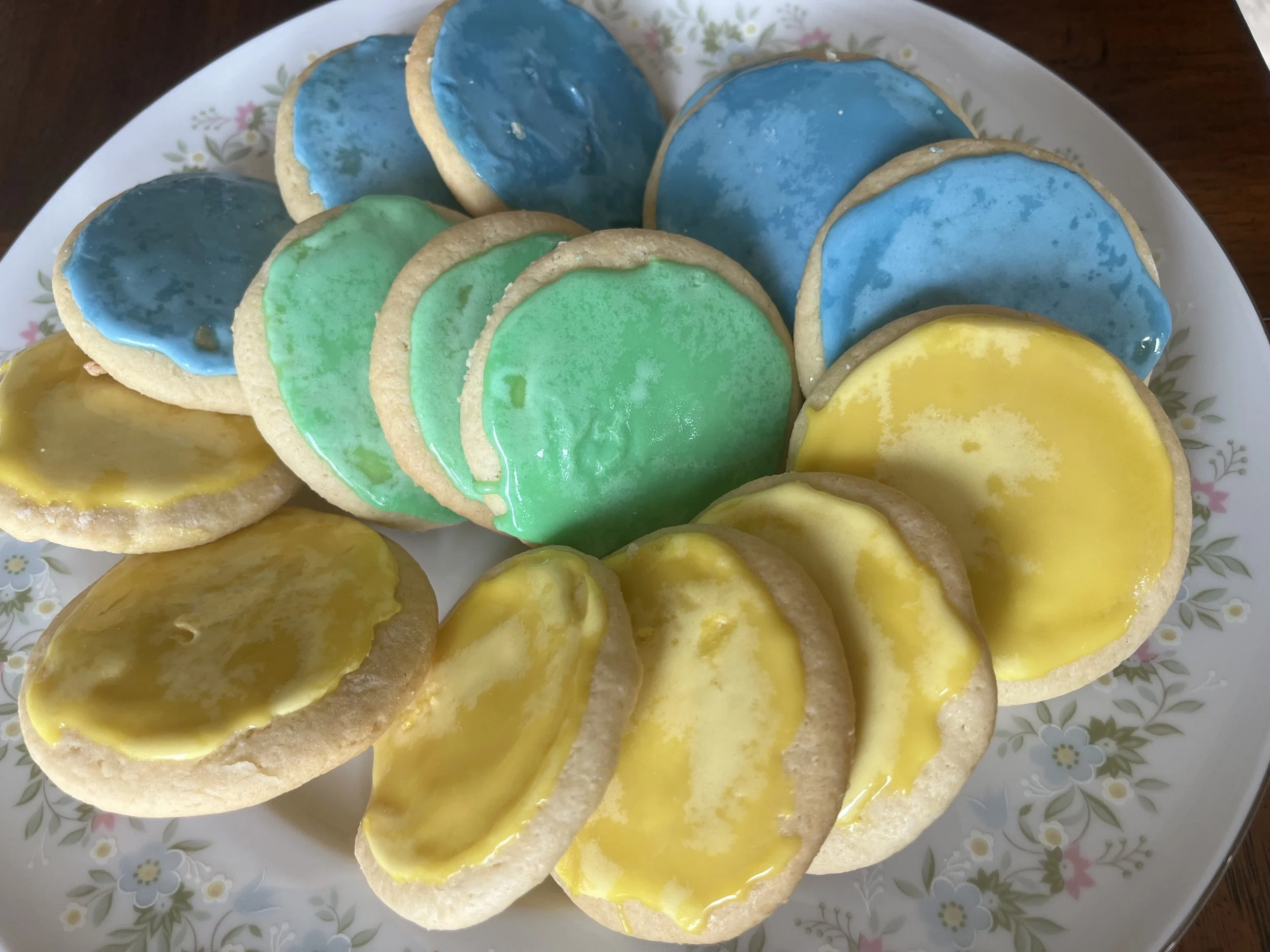
‘Tit cookies are soft and tender and perhaps the cookies that are dearest to my heart. The official name of the cookie is Petit Gateaux which means small cakes. In spoken language, they’re called ‘tit (pronounced tee) cookies. They’re similar to a sugar cookie but for some reason have more flavor.
These cookies are commonly found in rural South Louisiana and have spread to New Orleans and Baton Rouge. According to lore, the cookies became popular during the late 19th century and was a way to use excess sweet pie dough. The cookies have since become a treat in their own right.
This recipe was slightly adapted from Florence Gravois’ recipe that is featured in Bonfire Christmas: A Cajun Holiday Tradition by Pamela Folse and The Encyclopedia of Cajun and Creole Cuisine by John Folse.
‘Tit Cookies Ingredients
Makes 65-70 - 2 ½ “ cookies4 c flour
4 tsp baking powder
⅓ tsp salt
8 Tbl butter
1 ½ c sugar3 eggs
3 Tbl vanilla extract
‘Tit Cookies Directions
In a medium bowl stir together 4 c flour, 4 tsp baking powder, and ⅓ tsp salt.
In a stand mixer use a paddle attachment to cream 8 Tbl of butter on medium until it’s smooth and somewhat light. Add 1 ½ c sugar and beat at medium speed until it’s light and fluffy.
Add 3 eggs and 3 Tbl of vanilla to the butter mixture and beat until well incorporated.
Add about ¼ of the flour mixture to the butter mixture and on medium low beat for about 20 sec. Repeat until all of the flour mixture is incorporated into the mixture. The dough should feel soft and a little sticky.
Use a spatula to pull the dough into a ball in the center of the bowl. Cover the bowl with plastic wrap and refrigerate overnight. If you’re in a rush, spread the dough into the bottom of the bowl and freeze for about 20 minutes. You want it to be cold but not frozen.
When ready to bake, preheat the oven to 350.
Sprinkle flour onto a counter and portion out some of the dough (let the rest of the dough remain in the fridge). Put the dough onto the floured surface and sprinkle flour on the top of the dough.
Gently roll the dough to about ⅕” thick. This dough is soft so you’ll likely need more flour than you’re used to using. If the dough starts sticking, tearing, or resisting on the rolling pin or the counter, add more flour. No trying “I’ll make it work”. Trust me. It will lead to a mess.
You want the dough to be ⅕ - ¼” thick. Yes, it will feel thick. Use a 2 ½” round cookie cutter to cut the cookies. Put the cookies on a parchment lined baking sheet about 1 ½” apart. Slide the cookie sheet into the oven and bake for 5 minutes. Turn the sheet 180 degrees and bake for 5-7 minutes until the center is set, but the cookie has little browning. When finished cooking, put the cookies on a cooling rack.
Take the dough scraps and put them back in the refrigerator to chill. While the scraps are cooling, take a cold portion of the dough and repeat until all of the dough is baked.
When cookies are completely cooled, ice the cookies. Allow them to set with the icing for several hours or overnight before stacking them. The exterior of the icing will be firm but the underside of the icing will be soft.
Icing Ingredients
Almond Icing
2 ½ c powdered sugar
2 ½ Tbl milk
1 scant tsp almond extract
Food coloring
Vanilla Icing
2 ½ c powdered sugar
2 Tbl milk
1 Tbl clear vanilla extract
Food coloring
Anise Icing
2 ½ c powdered sugar
3 Tbl milk
⅛ tsp anise extract
Food coloring
Icing Directions
Sift the powdered sugar (if you ignore me and skip this step, don’t tell me you had lumpy icing) into a medium bowl.
Stir in the milk and extract until the icing is smooth. Add more milk to thin it or more sugar to thicken it. It should be a thick glaze consistency. Add food coloring and stir until combined.
Notes
These cookies are typically vanilla or almond flavored and have colored icing. Feel free to forgo the icing. We didn’t always use it. I like to use vanilla in the dough and do the icing in different flavors like vanilla, almond, and anise.
Most likely you’ll run out of icing before all of the cookies are iced. I like some cookies not to have icing because that’s when the cookie really shines.
If you’re cutting the dough into shapes, roll the dough thinner. You can roll it really thin for a crisp cookie.
My family uses this recipe for shaped Christmas cookies, you’ll need to roll the dough thinner for them to retain the shape. If you like, you can roll it very thin and have crisp cookies. For decorative cookies, you’ll need an icing that dries harder like royal icing.